Japanese Cheesecake


500 g  (16oz) cream cheese, at room temperature
60 g (6 Tbsp.) caster sugar
60 g (4 Tbsp) butter, at room temperature
6 large egg yolks, at room temperature
200 ml cream, at room temperature
10 ml (2 tsp.) lemon juice
80 g (2/3 cup) plain flour

For Meringue
6 egg whites, refrigerated
100g (10 Tbsp.) caster sugar

If the ingredients aren’t at room temperature,
place them in the microwave on defrost for a short while.
Preheat oven to 160C (320F) degrees.
Line the base and sides of a 23 cm (9”) cake tin.    
Beat the egg whites on medium low speed (speed 4) till opaque and foamy and bubbly. Then add ⅓ of the sugar at a time as the mixer runs, continuing to beat for 10 seconds after each addition. Once all of the sugar has been added, increase the mixer speed to high (speed 10) and beat for approximately 4 minutes, until the meringue has doubled in volume and is thick and glossy. Transfer the meringue to a bowl. No need to wipe out the mixing bowl
Beat together the cream cheese, butter and sugar on medium high speed until smooth.
Add the egg yolk, lemon juice and cream and mix until very smooth.
Add the flour all at once and mix well.
Add ⅓ of the meringue to the batter and mix this well.
Then add the rest of the meringue all at once and fold it in (not mix this time). It's ok if small white pieces from the meringue remain.
Pour the batter in the cake pan and then drop the pan from 2-3” (5-7 cm) high to the benchtop to remove any air bubbles.
Place the cake pan in a large roasting pan and pour in 1” (2.5 cm) of cold water.
Place the baking pan in the oven and bake at 320F (160C) for 60 minutes or until light golden brown. Then reduce temperature to 300F (150C) and bake for another 30 minutes.
When a wooden skewer inserted in the centre of the cake comes out clean without wet batter, turn the oven off. Let the cake sit in the oven with the door slightly ajar for 15 minutes. Remove from the oven and allow to cool before refrigerating for a few hours.

Helen and Judy’s Christmas Pudding

This recipe is deceptively simple, but just so delicious and moist. The pie apples make the difference.
Before beginning ensure you have a large, deep heat proof bowl that fits into an even larger saucepan.

Fruit Mix

500g Raisins
500g Currants
500g Breadcrumbs
4 tablespoons Flour

Pudding Mix

125g Butter
500g Brown sugar
110g Pie Apples
4 tablespoons Brandy
8 Eggs
1t Salt

Combine the ingredients for the fruit mix in a large bowl.
Using a mixer, mix all the pudding ingredients together. Don't mix too long, you don't want to mix air into this.
Stir creamed butter mixture into fruit.
Place in pudding basin and steam 5 hours. To do this watch http://www.bbcgoodfood.com/technique/how-steam-pudding, or see the instructions at the bottom of this page. I never remove and replace the foil and baking paper, but it still keeps for months.
Cool thoroughly.
On Christmas Day, remove the foil and run a knife around the outside of the pudding. Place a plate over the top of the pudding and turn it upside down. Lift the basin off. 
Microwave on medium until hot, about 15 minutes. Heating this in the microwave is amazingly easy and tastes exactly the same as steaming.
To flame the pudding, gently heat about 75 mls brandy to a little warmer than body temperature. Pour this over the warm pudding. Bring to the table, and then light with a match.
Serve with Brandy Butter.

Brandy Butter or Hard Sauce

500 grams butter, softened,
500 grams icing sugar
20-100 mls brandy, to taste
Cream the butter and sugar with electric beaters. Whip until lightened in colour.
Add brandy tablespoon by tablespoon, tasting after each addition until it is to your liking.

From Grandma Glen, Helen and Judy Hudson’s mother’s mother’s mother. Grandpa Dunhill’s parents.
Tryst House
10 Finkle St
Market Weighton,
Yorkshire

Kitchen Aid method

Cream butter and brown sugar with K beater. Add pie apples and continue until they’re mashed.
Add the rest of the wet ingredients. Add flour.
With dough hook add the rest of the dry ingredients. Steam 5 hours.

To steam the pudding

Take a large sheet of aluminium foil and a piece of buttered greaseproof paper about the same size. Make a pleat by folding a crease in the centre of both the paper and the foil.
Turn the buttered sheet over so the foil’s on top and press it around the bowl with the fold on top. Tie the foil tightly around the bowl using a long piece of string.
Trim away excess foil and greaseproof paper. Leave about two inches or 10 cm of foil and paper around the sides of the bowl.
Tuck the paper in and fold the foil around it to totally encase the paper and give the pudding a water-tight seal.
Make a handle for bowl by threading a double length of string through the string already tied around the pudding. Pull it through to the other side and secure. The pudding is now ready to go into the pan.
Place the pudding into the steamer set over a saucepan of simmering water, or use a large saucepan with a saucer in the bottom.
Steam for several hours, or as recipe indicates. Top up water when necessary.
When the pudding is steamed, cut the string around the bowl. Gently ease away the paper and foil.

Before storing the pudding ready for re-steaming, recover with a fresh sheet of foil and paper as before. Tie a handle around it for ease of removing

Moussaka of Eggplant with Seared Scallops and Tarama –Peter Conistis

For the taramosalata:

3 slices crustless white bread, soaked in cold water
½ Small onion, chopped1 Lemon, juiced
100gms Tarana
225ml Greek extra-virgin olive oil

For the tomato salsa:

2 Ripe tomatoes, peeled, seeded and chopped
3 tbls Parsley, finely chopped
½ tsp Fennel seeds
2 tbls Greek extra-virgin olive oil
Salt and Freshly ground pepper

For the eggplant and scallops:

3 Medium eggplants
2 Red bell peppers
24 White sea scallops
Vegetable oil for deep frying
Greek extra-virgin olive oil
Salt and Freshly ground pepper

Method:

1.      Squeeze the soaked bread.
2.      Process together with the onion and lemon juice at high speed.
3.      Add roe and process for another minute.
4.      With motor running, add the olive oil in a thin stream. Remove and chill.
5.      Combine all the ingredients for the tomato salsa and chill.
6.      Sprinkle the eggplant liberally with salt and leave to sweat on a sheet pan for 2 hours.
7.      Rinse and pat dry.
8.      Deep fry until golden. Drain on paper towels.
9.      Roast the bell peppers until their skin blackens.
10.   Remove skin under cold water. Remove pith and seeds.
11.   Cut the peppers into thin strips and toss with olive oil.
12.   Heat a heavy, non-stick skillet until very hot.
13.   Toss scallops with a little olive oil and pepper and sear for 30 seconds on each side.
14.   Place a slice of eggplant on each plate and top with a tablespoon of the taramosalata.
15.   Place 4 scallops on top, cover with a few strips of roasted red pepper and top with another eggplant slice.

16.   Drizzle generously with tomato salsa. Serve immediately

Tahdig - Persian Rice

4-6 serves
The aim of this rice is to have the grains as separate as possible. This looks complicated, but all the steps are easy, and once you’ve done them the first time, it’s easy to repeat it. It can be used for a crowd, using 1/3 cup uncooked rice per person. Instead of cooking it in a pot with the crust you could put it in a baking dish, cover with aluminium foil, and cook in the oven at 150 celcius for an hour.

1½ cups rice
Salt
Pinch Saffron
2 tablespoons butter
Optional – onions, dried fruit, nuts

Prepare the Rice

Rinse your required quantity of rice in a few changes of water, until the water runs clear.
Soak the rice in wait to cover for at least 1 hour.
At this point take a small pinch of very expensive saffron and soak in 3 tablespoons of rose water. The longer it soaks, the better the colour.
Par boil the rice in salted water for around 5 minutes. You know when it is ready because the grains of rice will rise to the top.
Drain the rice. You can do all this ahead of time.

Cook the Rice

Melt 2 tablespoons butter in the bottom of a non stick saucepan or frypan.
Add half a cup of rice and spread it evenly over the bottom of the pan.
Pile the rest of the rice up loosely into a dome shape. Using the back of a wooden spoon, make a few hole in the dome. All this is done so the steam can escape.
To stop the steam dripping back onto the rice, cover the top of the pan with a tea towel and then the lid.
Cook over medium high heat for 20 mins. The idea is that the rice on the bottom fries and gets crispy brown, but this takes practice.
Reduce heat to low and cook a further 30 mins. or you can leave it this way for a long time.

Finish it off

(Optional) In a separate pan fry onion, green onions, dried fruit etc in a little butter. Add a little boiling water to reconstitute the dried fruit.
Take the lid off the rice and stir through the onions, dried fruit and any nuts you may want to add, being careful not to disturb the crusty bottom.
Swirl the saffron liquid over the top.
Scoop the rice onto a serving platter. Carefully remove the crust and scatter it over the rice.


Thai Spiced Nuts

Serves 8 to 12

  • 2egg whites
  • 1teaspoon water
  • 1/3cup granulated sugar
  • 1/3cup brown sugar
  • 1/4cup cocoa (divided)
  • 1tablespoon grated galangal (or ginger)
  • 1teaspoon salt
  • 1/4teaspoon cayenne
  • Zest of 1 lime
  • 4cups cashew halves
  • 1teaspoon sriracha sauce (or more to taste)
  • 1tablespoon lime juice
  • 1/2cup diced candied ginger (optional)
  • 1/2cup diced dried mangos (optional)
  1. Preheat oven to 275 F.
  2. Beat the egg white and water together until light and frothy.
  3. In a separate bowl, combine all but 2 tablespoons of the cocoa, the sugars, galangal, salt, cayenne, and lime zest. Make sure it’s well combined.
  4. Fold the nuts into the egg whites and then add the sugar and spice and sriracha. Combine well.
  5. Spread the nuts on a baking sheet. A silpat will be helpful, but if you don’t have one, use a sheet of parchment paper. Bake for 30 minutes, stirring every ten minutes.
  6. Remove from oven and add lime juice, then sprinkle with the rest of the cocoa powder. Return to oven just for a couple minutes to dry out a bit. Allow to cool completely (5 to 10 minutes) before serving. If using, toss in the ginger and mango at the end.

Roast Chicken with Saffron, Honey, Red Onions and Pistachios


Serves 4
This dish tastes amazing. The combination of cardamom, saffron, rosewater and pistachios is as fragrant as a spring garden. It is as colourful too. The red onions and yellow saffron contrast well with the green pistachios. You could add to these colours with fresh parsley and pomegranate garnishes.  It is based on a recipe by Ottolenghi

4 chicken breasts
4 tbsp olive oil
1 tsp cardamom
a pinch of saffron threads
juice of 1 lemon
100 g honey
1 tsp each of salt and  pepper
2 red onions, cut into 8 wedges each. Cut through the root end so the sections stay together
1tspn sugar and pinch salt
100g pistachios, ground
2 tbsp rose water

In a large bowl, mix the chicken breasts with 2 tbsp olive oil, cinnamon, saffron, lemon juice, 50g honey and salt and pepper. Leave to marinate for at least an hour, or overnight in the fridge.
Mix onions with remaining 2 tbsp olive oil, sugar and salt.
Spread onions on baking dish lined with baking paper. Cook at 150 C for 30 mins.
While the onions are roasting, mix the remaining 50g honey and nuts together to make a rough paste. 
Remove onions from the oven pour the chicken marinade over them. Mix gently to avoid breaking up the wedges. and push to the perimeter of the pan.
Place the chicken breasts in the centre of the pan and top with the pistachio mixture.
Return to the oven for 30 mins, or until the chicken breasts are cooked. If they’re undercooked they will feel soft when pressed. If they’re giving off liquid, they’re overdone. Getting them firm, but before they exude their juice can be tricky and depends on the size and thickness of the chicken.
Place chicken on the plate first.
Then add the rosewater to the onions and juice left in the pan, toss gently and serve alongside the chicken.


Peanut or Nut Brittle

This is a recipe I am developing. Use it, but use your own discression.
The nuts can be toasted or untoasted, or even a mixture. Not sure about this quanitiy. Using two varieties of nuts will make it difficult to get them both to properly browned at the same time. If in doubt, toast them seperately, add them to the toffee and only cook until they've stopped forming a ball in the toffee.
I am trying to make a bitter, salty, thin brittle with lots of nuts. If you don't like it like that, reduce the salt, temperatures, quantity of nuts and size of pan.
2c sugar
1c corn syrup
1t salt
2T water
1T butter
1-2t bi carb soda
1t vanilla
350 - 500g
Flaked salt to sprinkle on the top
Boil sugar, corn syrup and water until caramel stage is reached, at least 180-193.
Add nuts and reheat until they no longer form a lump and they are the required colour. The nuts will colour at a lower temperature than the sugar will turn to caramel stage, so no need to use thermometer here.
Add butter, bi carb and vanilla.
Heat 2 lamington tins in the oven, so the toffee spreads more easily. 
Spread out in 1 or 2 pans. Pull, lift and stretch with 2 forks to thin. But be careful not to deflate the bubbles made by the bi carb as these give a light texture.

Putting the Buttery Crunch in Peanut Brittle

Raw nuts, butter, and baking soda are secrets to richly flavored, delicate brittle

by Flo Braker
from Fine Cooking 
Issue 24
Candy is a frivolous thing with no other purpose than to delight, and that's why it's so wonderful. But for many home cooks, candymaking is becoming a lost art. They think of candy as complicated and technically difficult, but the truth is that a lot of candies are quite simple to make. When the holidays come around, along with the usual assortment of cookies, I like to give homemade candy, and peanut brittle is one of the quickest, easiest candies to make. With just a few ingredients, most of which I have on hand, I can make wonderful homemade peanut brittle in less than an hour and a half from start to delicious finish.
Baking soda and butter make a more delicate brittle

Baking soda adds bubbles—millions of minuscule ones that make the brittle more porous. Take the syrup off the heat before adding the baking soda so it doesn't foam out of the pan.
Sugar syrup is the foundation of candymaking. To make peanut brittle, the sugar syrup must be cooked to what is called the hard-crack stage. That means that the syrup solidifies when cooled, breaks easily when snapped, and no longer feels sticky. At this stage, the syrup will register between 305° and 310°F on a candy thermometer.
The trick, though, is to make a candy that's truly brittle so that it breaks when you bite it, rather than a hard candy that must be sucked like a lollipop or toffee. By adding baking soda to the sugar syrup, you unleash a zillion minuscule air bubbles that give the candy a porous, delicate texture. Butter also helps to make the candy tender and easier to chew, as well as adding its own rich flavor.
Raw peanuts give better flavor
fca24br54-02.jpg
The peanuts toast and even pop a bit as the sugar syrup turns a rich, light-golden color. They'll flavor the syrup as they cook and make the brittle taste nuttier.
For candy with a rich peanut flavor, use raw nuts: the Spanish variety (with red, papery skins) or blanched raw peanuts. Raw nuts can be added relatively early in the cooking process. They'll flavor the syrup as they cook and give the brittle a nuttier taste. Look for Spanish or blanched raw peanuts in well-stocked supermarkets or in health-food stores.
If you use roasted nuts, however, add them at the end of the cooking time. If added too soon, roasted nuts could burn and leave the candy with a bitter taste. Warm roasted nuts first in a 250°F oven. Adding cold nuts to the hot syrup could cause it to seize and crystallize. Also, if the nuts are salted, omit the salt in the recipe.
Other nuts—particularly soft-textured ones like pecans, cashews, and walnuts—are more susceptible to burning, which can make the candy bitter. If you want to make brittle with any of these nuts, add them when the sugar syrup has almost finished cooking, at around 290°F.
Stretching makes the candy thin
fca24br54-03.jpg
Thick gloves are a must for protecting your fingers from the hot candy. Stretch the brittle as thin as you can so that the nuts are just barely bound together with the thin, crunchy candy.
Stretching the candy while it's still hot and pliable makes a thinner brittle that's easier to eat. It takes less than a minute for the mixture to cool enough so that you can begin stretching. Wearing rubber gloves so you don't burn your hands, lift the edges and pull gently. If the peanut brittle is still too hot, wait five seconds and try again. Don't just pull along the edges but from the middle, too, to make the brittle as thin as possible. The nuts should be just barely bound together with tender, crunchy candy.

Bee Sting Cake

Cake
2 1/4 teaspoons (or 1 1/4-ounce package) instant yeast (not active dry) (also sold as rapid rise or bread machine yeast)
3/4 cup whole milk, ideally at room temperature
1/4 cup granulated sugar
2 cups all-purpose flour
3/4 teaspoon table salt
2 large eggs, ideally at room temperature
4 tablespoons unsalted butter, at room temperature
Honey-Almond-Crunch Topping
6 tablespoons unsalted butter, cold is fine
1/3 cup granulated sugar
3 tablespoons honey
2 tablespoons heavy cream
1 1/2 cups (4 3/4 ounces) sliced almonds
Two pinches of sea salt
Pastry Cream Filling
1 cup whole milk
Seeds from 1/4 to 1/2 vanilla bean, or 1 teaspoon pure vanilla extract or 1/4 teaspoon almond extract
3 large egg yolks
1/4 cup granulated sugar
3 tablespoons all-purpose flour or cornstarch [updated]
2 pinches sea salt
2 tablespoons unsalted butter, cold is fine
Make the cake: Combine all of the cake ingredients in a medium-sized mixing bowl, stirring till the mixture becomes cohesive, then stirring for two minutes more. In a stand mixer, you can mix this with the paddle attachment (no dough hook needed; batter is thin) at low-medium speed for 2 to 3 minutes. Scrape down sides, cover with plastic wrap and let rise in a draft-free place for 60 minutes, till it’s a little puffy. (It won’t fully double; this is fine.)
Butter a 9-inch round cake pan. Stir the batter a few times to deflate it slightly, then scrape it into the prepared pan and nudge it until it fills the bottom. Cover again with plastic wrap (don’t let it drape in and touch the top) and set aside for another 30 minutes.
Meanwhile, make the honey-almond-crunch topping: In a small or medium saucepan over medium heat, heat the butter, sugar, honey, cream and salt until the butter is melted. Bring to a simmer and let it boil for 3 to 5 minutes, until the mixture becomes a shade darker (it should go from a yellowish tone to a light beige), stirring frequently. Stir in the almonds. You will probably panic because this mixture is going to get very thick — but don’t. Set it aside to cool slightly.
Heat your oven to 350 degrees.
Once the cake has finished its second rise (again, it’s not going to rise a lot; don’t sweat it) use a small spoon to scoop out small amounts of the almond topping and distribute it over the top of the cake. It’s going to be a little pesky because it is firm, but I promise (see above: multiple photos of this process to ease your worry), even if it’s not perfectly evenly distributed, it will all smooth out gorgeously in the oven.
Bake cake on a foil-lined tray to catch any caramel drips, for 20 to 25 minutes, until top is bronzed and toothpick inserted into the center comes out batter-free. (Caramel on it is fine, and should be tasted.) Transfer to a cooling rack and let it sit in the pan for 10 minutes. After 10 minutes, run a knife along the outside of the cake, making sure no places are stuck and invert the cake onto the cooling rack. If you’re like me, you’ll be positive that all of the almonds will fall off, but shockingly, in five rounds, I only lost one or two. Reverse it back onto another rack to finish cooling, replacing any almonds that fell off right back on top. They’ll merge back with the caramel as it cools; nobody will know.
Make pastry cream: Warm milk and vanilla bean scrapings (if using; if using an extract, don’t add yet) in a medium saucepan. Pour into a small bowl or cup, ideally with a spout. Set aside. Rinse saucepan with cool water, to rinse and cool; wipe to dry. Off the heat, whisk the yolks and sugar vigorously together for a minute, until pale and ribbony. Whisk in flour and salt until smooth. Drizzle in warm milk mixture, a spoonful at a time, whisking the whole time. Once you’ve add half of it, you can add the rest in a more steady stream, again whisking the whole time. Return the saucepan to the stove and cook on medium-high heat until it bubble, then simmer for one to two minutes, more whisking the whole time. Off the heat, whisk in the butter and any extracts you may be using. Cool custard completely before using, a process that can be sped up in the fridge or whisking it over a bowl over ice water.
Finally, assemble the cake: Once both the cake and pastry cream are fully cooled, place the cake on a serving platter and divide it horizontally into two layers with a long serrated knife. Spread pastry cream over bottom half. Place top half on pastry cream. Serve in wedges; watch out for bees. Refrigerate any leftovers.

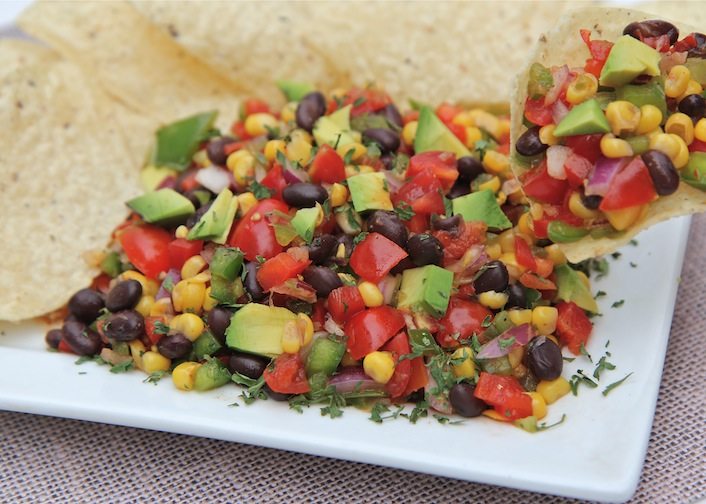
Black bean and corn salsa


2 x 400g cans black beans, drained and rinsed or 1/2 cup dried beans, prepared (see below)
1 ½ cups corn kernels, thawed
1 capsicum, finely diced
1 cup finely diced celery
¾ cup minced red onion, salted for 20 mins, then rinsed under boiling water
1 fresh chilli, seeded and minced
½ cup chopped coriander
I avocado, diced

Lime dressing
¼ cup fresh lime juice
2 tsp  grated lime zest
2 tbs brown sugar
1 tbs Dijon mustard
S + P to taste
¼ cup vegetable oil

1. In a large bowl, combine all salad ingredients, except avocado.

2. In a small bowl, combine all dressing ingredients, except the oil. Mix together, then gradually whisk in the oil.

3. Pour dressing over salad, and stand one hour before serving.

To prepare black beans cover with water, heat and simmer for 2 minutes. Allow to stand for 1 hour, then drain, cover with lots of water and simmer 20-30 minutes. Don't allow them to boil at this point or their skins will split. 

Microwave Custard

2 egg yolks
2 heaped tablespoons cornflour

1 teaspoon vanilla essence
2 cups milk
2 tablespoons caster sugar
1.      Whisk egg yolks, cornflour and vanilla to a smooth paste with a tablespoon of the milk.
2.      Place remaining milk and caster sugar in a separate microwave bowl. I use a clear Pyrex 4 cup jug. That way I can see through the window when it boils and the jug is big enough for it to not boil over.
3.      Heat milk in microwave until it boils. This takes 5 minutes in my microwave, but will be different in yours. It must boil or the custard will not thicken.
4.      Remove from microwave and pour into the egg yolk mixture, whisking as you do this.
5.      Whisk until thick.


Chewy and Gooey Pistachio Friands

120g pistachios
200g icing sugar
200g butter, melted
5 egg whites
80g flour

Preheat oven to 180 deg C. Prepare 6 friand or cup cake tins by either greasing and flouring, or lining with patty cake liners.
Grind the pistachios in a food processor until very very fine. This will take 3-5 minutes.
Add icing sugar and continue to grind even more finely.
Add melted butter and process  to incorporate.
Whisk egg whites until they’re foamy.
Add the pistachio mixture.
Gently fold in flour. Be careful not to over mix the flour.
Pour into prepared moulds and bake for 30 mins.
These keep for a long time, but are at their best fresh out of the oven when the outside of the cakes is chewy. The inside will be more moist than normal friands. .


Char grilled corn on the cob

Microwave corn cobs for 4 mins each. This gives them an initial steam cook and loosens the husk for easy removal
Cut 2.5 cm off the bottom of the corn. Grasp the top of the husk and shake gently. The corn will drop out completely husked
Place on hot bbq to char the corn kernels, rotating only after each side has picked up a bit of char.
Brush with melted butter and serve immediately.  

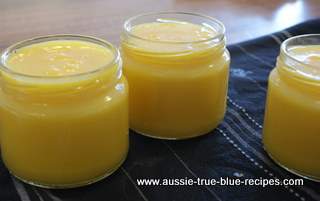
Lemon Butter in the Microwave

·      200g caster sugar
3 eggs
250 ml fresh lemon juice
100g unsalted butter, melted
Zest of a lemon or two (optional)
Pour boiling water into glass jars to sterilise them.
In a microwave bowl, whisk together the melted butter, caster sugar and eggs until smooth. Stir in lemon juice.
Cook in the microwave for one minute intervals, stirring after each minute until the mixture is thick enough to coat the back of a metal spoon.
Remove from the microwave, and pour into small sterilised jam jars. Store for up to three weeks in the fridge.

Peanut Biscuits

125g butter
230g castor sugar (scant ¾ cup)
150g SR flour (1 large heaped cup)
1 egg
¾ cup unsalted peanuts
Cream butter and sugar.
Add egg and beat.
Fold in flour and peanuts.
Cook at 150 for 10-15 mins. They should be brown only around the edges.
This recipe is from Leila, Ted Hudson’s mother. Granny often made these for us and they’re really yummy.)

South East Asian Beef Curry

Not a beef rendang because there’s too much sauce. Not a massaman curry because there’s no potatoes. This is a compilation of my favourite curry ingredients, served as Mum served her sweet curry and rice back in the 60’s. The sauce lacks 2 things – chilli and coconut milk. But it is thick with spices. You’ll need a blender or food processor for this recipe.

2 onions, chopped
2 tbsp neutral flavoured oil (not olive)
1 tbsp chopped fresh ginger
1 tbsp chopped galangal (or another tbsp of fresh ginger)
1 tbsp chopped garlic
1-2 stalks lemongrass
6 kaffir lime leaves
½ cup desiccated coconut
1 cinnamon stick
750g beef cut into 1cm cubes
2 tbsps soy
1 tspn red curry paste
1 tbsp tamarind water or juice of a lime

Fry onion with a little salt in oil until just browned.
Process finely galangal, ginger, lemongrass, garlic, kaffir lime and desiccated coconut. Add enough water to ensure it processes finely. Reserve 2 tsps. to add later. Fry remainder with the onions for 30 seconds.
Add beef, cinnamon stick, tamarind, curry paste and soy. Add enough water to just cover meat, stir to combine, and place in oven at 90 degrees Celsius for at least 3 hours, or until tender.
To serve, place plain rice in the centre of a plate, and make an indentation in the middle. Place curry in the indentation. Place accompaniments around the curry.

Accompaniments
Tomatoes chopped combined with fresh coriander
Bananas mixed with desiccated coconut
Cucumber grated and combined with yoghurt
Poppadums
Sweet chutney